
SOC 2 TYPE II Certified · HIPAA · PCI DSS · WCAG 2.2 AA · Trust.TruCentive.com
Only Pay for Claimed Rewards
Support | 415-386-8600
Every year on May 20, the clinical research community pauses to celebrate Clinical Trials Day.
It is a chance to reflect on how far medical science has come and, more importantly, to recognize the people who make that progress possible.
The day is rooted in history, and it’s also reminder that behind every new treatment or breakthrough is a network of people working with purpose.
For organizations, it is also a great opportunity to bring that purpose into focus and reconnect teams with the impact of their work.
Clinical Trials Day traces its origin back to the work of Scottish naval surgeon James Lind in 1747. He was trying to understand how to treat scurvy, which was a serious problem for sailors at the time.
His approach was simple but groundbreaking. He tested different treatments on groups of sailors and compared the results. He found that citrus fruits made a real difference, helping to establish the idea that medical treatments should be tested in a structured and measurable way.
That idea still drives clinical research today. The tools have changed. The scale has changed. But the goal remains the same: find out what works, prove it, and use that knowledge to improve care.
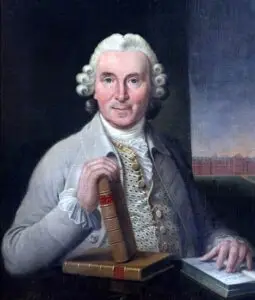
Clinical Trials Day traces its origin back to the work of Scottish naval surgeon James Lind in 1747. He was trying to understand how to treat scurvy, which was a serious problem for sailors at the time.
His approach was simple but groundbreaking. He tested different treatments on groups of sailors and compared the results. He found that citrus fruits made a real difference, helping to establish the idea that medical treatments should be tested in a structured and measurable way.
That idea still drives clinical research today. The tools have changed. The scale has changed. But the goal remains the same: find out what works, prove it, and use that knowledge to improve care.

One of the most important things Clinical Trials Day does is shift the focus to people.
Participants are at the center of every study. They are the ones who volunteer their time, follow study requirements, and take on a level of uncertainty. Without them, research simply would not move forward.
Then there are the professionals behind the scenes. Coordinators, investigators, data teams, and operations staff all play a role in keeping trials running. Their work is detailed, fast paced, and often under pressure. Most of it happens quietly, without much public attention.
This day is a chance to change that, even if just for a moment.

Clinical Trials Day can easily pass by as just another industry observance. But it does not have to.
It is one of the easiest opportunities to build engagement without overcomplicating things.
A simple message from leadership acknowledging the clinical and administrative teams’ work can go a long way.
Sharing a story about how a study is impacting patients can help reconnect people to the bigger picture.
A small reminder of gratitude and a memento can go a long way to reinforcing the message. Even a short team gathering or recognition moment can create a sense of shared purpose.
The key is not to make it elaborate. It is to make it genuine.
When people feel seen and appreciated, especially in demanding environments like clinical research, it makes a difference.

If organizations want to take it a step further, flexible employee incentives can play a meaningful role.
This is not about turning the day into a promotion. It is about reinforcing appreciation in a way that feels tangible.
For employees, offering a choice based reward, whether it is a digital reward, merchandise, or a small experience, gives people something personal to connect with. Choice matters because not everyone values the same thing, and flexibility makes recognition feel more thoughtful.
Even small gestures, like spot recognition or team based rewards, can create a positive moment that stands out in the middle of a busy workload.
For participants, the idea is a bit different but just as important. While compensation must follow clear guidelines, the experience around it matters. Timely payments, clear communication, and simple thank you messages all contribute to how participants feel about being part of a study.
Those details build trust, and trust is everything in clinical research.
Clinical trials are not standing still. The way studies are designed and managed is changing quickly.
Decentralized trials, digital tools, and new approaches to participant engagement are all shaping the future. These changes are helping reduce burden, expand access, and improve efficiency, but they also introduce new layers of complexity.
That means the people involved in clinical research are constantly adapting. Learning new systems, adjusting workflows, and finding better ways to support participants.
Clinical Trials Day is a good moment to recognize that effort too. Not just what has been achieved, but what it takes to keep moving forward.

We celebrate Clinical Trials Day on May 20, in recognition of what is often considered the start of the first randomized clinical trial. In 1747, James Lind began a clinical trial on this day to study the effects of different remedies for scurvy among sailors at sea. His research famously provided evidence of the benefits of citrus fruits to treat this disease. Clinical trials have undergone many changes since the time of James Lind, not only in respect to medical, scientific and technological advances, but also in terms of ethical and legal requirements. Regardless, clinical trials remain a critical part of drug development, as a means of generating evidence to support the regulatory decision-making for safe and effective new medicines.
May 20 is an opportunity celebrate the individuals who participate in clinical trials, as well as those professionals who help run clinical research and the FDA staff who review and interpret results from these trials. It is also a chance to emphasize the importance of innovating clinical trials. Despite the tremendous progress we have made, there are new medical challenges and quandaries we have not solved — both of which require innovation and creative thinking. That is why through the CDER Center for Clinical Trial Innovation (C3TI) and other initiatives, CDER is working to further existing clinical trial innovation programs and spur future activities.
James Lind was an eighteenth century Scottish surgeon whose curiosity and practical thinking helped change the course of medicine. Born in 1716 in Edinburgh, Scotland, Lind joined the British Royal Navy as a young medical professional and spent years caring for sailors on long and often dangerous sea voyages. One of the most persistent threats he encountered was scurvy, a mysterious and deadly illness that left sailors weak, exhausted, and unable to work. At the time, treatments ranged from vinegar to seawater, but no one had carefully tested which remedies actually worked.
In 1747, while serving aboard the HMS Salisbury, Lind decided to take a more systematic approach. He selected twelve sailors who were suffering from similar symptoms of scurvy and divided them into small groups. Each group received a different remedy. Some were given cider, others vinegar or medicinal mixtures. Two sailors, however, were given oranges and lemons. The results were striking. Within just a few days, the men who received citrus fruit began to recover, while the others showed little improvement. Lind had done something simple but revolutionary. He compared treatments under similar conditions and observed the outcomes, creating what is now recognized as one of the first controlled clinical trials.
He later shared his findings in his 1753 book, A Treatise of the Scurvy. Although it took years for the British Navy to fully act on his discovery, Lind’s experiment marked an important turning point. His practical, evidence-based approach helped pave the way for the clinical research methods that continue to guide medical progress today.
Lind was later appointed Chief Physician of the Royal Naval Hospital Haslar (1758–1783)

Clinical Trials Day is a perfect opportunity to recognize your team and and express gratitude for the success and dedication of team members.
Here are a few simples ideas that you can use to plan your show of gratitude for your team:

Start with one of our send-ready projects, modify it with your message and just add your recipients.
Your logo is built right in, and you can personalize everything—or keep it simple if you prefer.
• Your company branding included
• Personalized for each recipient and sent from you
• Delivered by email or text
• Automated reminders handled for you
From a single thank-you to a company-wide incentive, you can send awards, gifts, or incentives in under five minutes for Clinical Trials Day.
At its core, Clinical Trials Day is not complicated. Recognition is the most important element.
It is about acknowledging the people who show up every day to move research forward and about remembering that behind every data point is a person, whether that is a participant or a professional.
And for organizations, it is a chance to pause, even briefly, and say that the work matters.
When that message is reinforced, through words, through actions, or through small but thoughtful incentives, it tends to stick.
That is what makes the day worth celebrating.
Design Sessions are a great way to review best practices and to create a complete delivery sample.
We’ll walk you through building a complete project in the campaign builder with your logo, your recipients, and your incentive selections.
We use cookies to improve your experience on our site. By using our site, you consent to cookies.
Manage your cookie preferences below:
Essential cookies enable basic functions and are necessary for the proper function of the website.
These cookies are needed for adding comments on this website.