
SOC 2 Type II attested · HIPAA · PCI DSS · WCAG 2.2 AA · Trust.TruCentive.com
Only pay for claimed deliveries
Support | 415-386-8600
National Bagel Day is a great time to have a little bit of casual fun at work. The day is celebrated annually in the United States on January 15th to honor this delicious staple of breakfast items.
It’s a perfect excuse to bring folks together to indulge in their favorite bagels and try new toppings.
We’ve got a few ideas on how to make the day fun and memorable for employees and how to use incentive automation to include remote employees.

OK – That may be a bit of a stretch, but there is significant evidence that employee satisfaction is a key driver of workplace engagement and workplace longevity.
National Bagel Day is an excellent time to let your employees have a little fun.
Research suggests that kindness yields positive outcomes for businesses. If you’re an emerging leader, being kind to your employees can help you retain top talent, establish a thriving culture, increase employee engagement, and enhance productivity. (Harvard Business Review)
Employee satisfaction is when workers feel content and fulfilled with their jobs, according to MarshMcLennan. This feeling makes them more likely to stay with a company long term. Minimizing turnover saves your organization money while boosting workforce continuity and stability.
Frequent “pats on the back” are one important component of acknowledging employees and showing gratitude.
A bagel breakfast cannot guarantee satisfaction, engagement, productivity, or retention. It can, however, provide a low-pressure setting for appreciation and conversation when participation is optional and the experience is designed around the team.
Thoughtful leadership, fair working conditions, clear communication, growth opportunities, compensation, and consistent recognition all shape the employee experience. A small event is best treated as one supporting activity rather than a substitute for those fundamentals.
Pair the gathering with a sincere thank-you and clear recognition of specific contributions. For more ideas, see gratitude and appreciation in the workplace. Measure participation and feedback instead of assuming the event changed morale or retention.
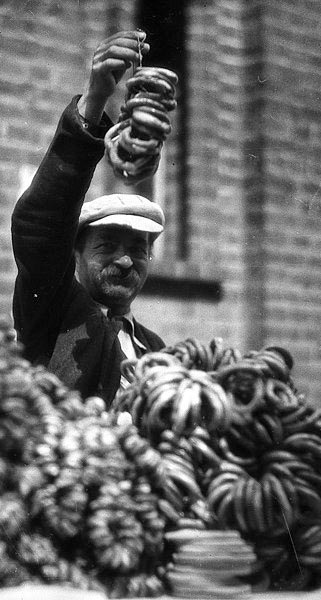
Bagels originated in Poland during the 17th century and were a staple in Jewish communities.
The first written mention of bagels appeared in 1610 in Krakow, Poland, in Jewish community regulations, stating they were given to women after childbirth.
Bagels moved from Eastern Europe to the United States through immigration, primarily through New York City and began their ascent into popularity in the late 19th and early 20th century.
Bagel bakers in New York formed an organization for bagel bakers in 1907. For decades, the International Beigel Bakers’ Union and Bagel Bakers Local 338 held contracts with nearly all bagel bakeries in and around New York City for its workers.
By the mid 20th century bagels became very popular and began to show up in the proliferation of pre-package bagels and bagel shops and bagel chains. Many purists insist, of course, that a good bagel can’t possibly come pre-packaged, and must come fresh from a bagel shop.
The bagel had been largely a specialty food item prior to Danile Thompson’s invention of the “Thompson Bagel Machine,” which he began building in his garage in Cheviot Hills, Los Angeles, in 1958.
Before Thompson’s automated bagel maker was invented, making bagels was a slow, mostly hand process. The machines increased production and helped popularize bagels and make them available to a wider consumer base.
More about bagel history at NYC Bagel Tours.
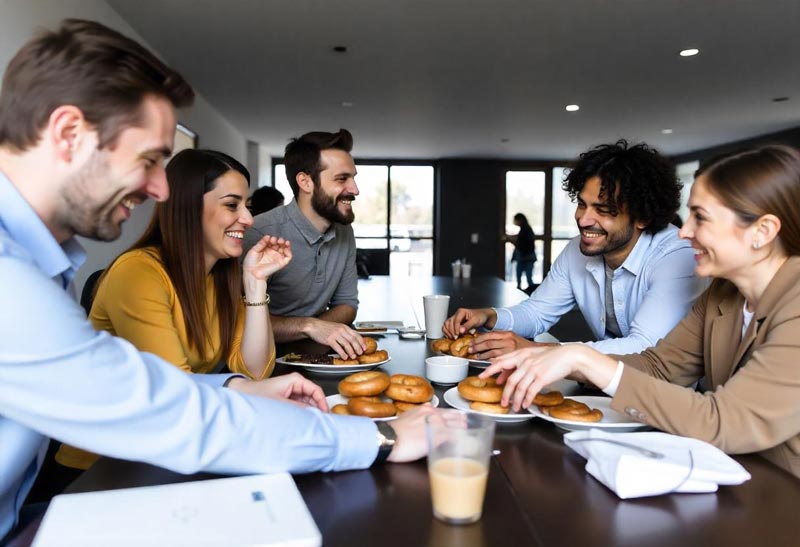
A modest, well-planned gathering may create an opportunity for connection and appreciation. Results depend on the team, timing, participation, and broader workplace environment, so invite feedback and avoid presenting the event as a guaranteed culture or performance intervention.
Offer an optional break from the routine without pressuring employees to attend, eat, share personal information, or participate outside their normal schedule.
Consistent recognition may support a positive employee experience, but a food event does not by itself improve retention. Evaluate retention with appropriate workforce measures and consider the full set of factors that influence it.
A specific, sincere thank-you can communicate appreciation. Provide comparable options for employees who cannot eat the food or attend the event, and use feedback to assess whether the gesture was meaningful.
Connect recognition to an observable contribution without exposing confidential performance information or creating unfair comparisons. Recognition should follow workplace policy and use consistent, documented criteria.
A bagel breakfast can be a straightforward way to thank employees and create time for informal conversation. Keep the event optional, schedule it within reasonable working hours, and provide an equivalent experience for employees who cannot participate in person.
For a buffet, consider plain, sesame, everything, cinnamon-raisin, and whole-wheat bagels, then confirm ingredient and cross-contact information with the supplier. Separate utensils and clear labels can help guests make informed choices, but they do not eliminate allergy risk.
Offer spreads such as cream cheese, butter, seed or nut-free alternatives, hummus, jam, avocado, or other options appropriate for the team. Follow local food-handling requirements and arrange refrigeration, serving time, and cleanup before the event.

Toppings can include cucumber, tomato, red onion, capers, fresh herbs, fruit, jam, or other sweet and savory choices. If offering smoked fish, eggs, meat, dairy, nuts, or sesame, label ingredients and manage temperature and cross-contact risks.
Fruit, yogurt or non-dairy alternatives, coffee, tea, and juice can round out the menu. Confirm portions, budget, dietary accommodations, accessibility, waste handling, and supplier cancellation terms before placing the order.
Use anonymous preference collection when possible, limit dietary information to what is necessary, and follow workplace privacy and retention practices for any responses.
Remote and hybrid employees can participate through a local meal option, an eligible food-delivery or merchant gift card, or a comparable non-food choice. Merchant, delivery service, denomination, geography, fees, taxes, expiration, and availability vary; do not promise a specific brand until the catalog and recipient location are confirmed.
Schedule any shared video activity within working hours, make participation optional, provide captions or other requested accommodations, and avoid requiring cameras. Obtain consent before sending reminders or publishing screenshots, names, or celebration photos.
Pair the event with a sincere message, a policy-consistent recognition reward, or a team spotlight approved by the participant. Use the campaign builder to configure the sender, recipient list, message, eligible reward choices, timing, and support information for on-site and remote recipients.
Design Sessions are a great way to review best practices and to create a complete delivery sample.
We’ll walk you through building a complete project in the campaign builder with your logo, your recipients, and your incentive selections.
We use cookies to improve your experience on our site. By using our site, you consent to cookies.
Manage your cookie preferences below:
Essential cookies enable basic functions and are necessary for the proper function of the website.
These cookies are needed for adding comments on this website.