
SOC 2 Type II attested · HIPAA · PCI DSS · WCAG 2.2 AA · Trust.TruCentive.com
Only pay for claimed deliveries
Support | 415-386-8600
In clinical research, retention management ensures that subjects are compensated accurately and on time.

Accurate, timely, flexible compensation helps reduce friction, build trust, and keep participants engaged throughout a study.
Clinical trial management covers a lot of ground: from keeping participants informed and supported, to making sure site teams have what they need to do their jobs well.
But amid all the moving parts, one aspect of retention that often flies under the radar is how participants are paid. When someone gives their time to a study, making sure they’re compensated accurately and on time isn’t just good practice, it’s a meaningful way to show them their contribution matters.
Two common leaks influenced by the patient payment process include:
Left unmanaged, both participant drop-off and unclaimed payments quietly erode study quality, inflate costs, and create compliance risks that are far easier to prevent than to fix.
“Emotional loyalty is driven by choice and appreciation.”
– Mary Pilecki, Forrester analyst
Retention isn’t just about reminders and relationship-building; it’s about removing friction at every stage of the participant experience.
Payments are no exception. When participants have to jump through hoops to receive their compensation or are locked into a single payment method that doesn’t work for their lifestyle, it sends the wrong message about how much their time is valued.
Offering a choice of payment options, whether that’s a prepaid debit card, direct bank transfer, popular gift cards, digital wallet, or check, is important in meeting the needs of diverse audiences and is critical to retention.
Not everyone has a bank account. Not everyone is comfortable with digital payments. And not everyone wants to wait for a check in the mail. Flexibility signals respect, and respect builds trust. The data backs this up. Studies that offer between five and ten payment options and send at least three reminders per payout see participant drop-off fall by 13% over a four-year period. It’s a meaningful difference, and a simple one to achieve.
The experience matters just as much as the choice. A seamless, timely payment process where participants know what they’ll receive, when they’ll receive it, and can easily flag an issue if something goes wrong reinforces their commitment to the study. It tells them that their contribution is recognized and that the team managing the trial is organized and professional. In contrast, delayed payments, confusing processes, or a lack of communication around compensation are among the fastest ways to erode participant trust and, ultimately, retention.
When the payment experience is smooth, it becomes one less reason for someone to walk away.
A payment option on its own is just a mechanism. A reminder on its own is just a nudge. But when the two work together, they become more powerful: it’s a consistent signal to participants that their involvement is valued and taken seriously.
Reminders do more than prompt action. A timely message letting someone know a payment is on its way tells them the study is organized, their contribution hasn’t gone unnoticed, and their time is respected.
For participants months or years into a long study, that kind of touchpoint can be the difference between staying engaged and quietly drifting away.
Choice amplifies that message. When participants can select how they want to be paid, it shifts the relationship from a transaction to a personal acknowledgment that they are individuals with different needs, not just data points.
Done well, every payout becomes an opportunity to reaffirm why their participation matters and carry them forward to the next visit or sample submission.
Not every participant wants to be paid the same way — and that difference matters. A participant driving an hour to a rural clinic has different needs than a younger urban enrollee who lives on their phone.
Giving participants the freedom to split their compensation across options — a gas card, a gift card, a direct deposit — rather than defaulting to a single payout is a small shift with a big impact. It tells them they’re seen as individuals, not just subjects. And that feeling of being genuinely valued is, ultimately, what keeps people in a study.
Compensation funds are essential to successful study execution. Yet a meaningful portion of these funds are never used by participants.
Unclaimed compensation, expired stipends, and unspent payout balances leave capital stranded. This inefficiency is not caused by overspending or operational failure. It is built into traditional payout models.
A standardized compensation approach can fall short and may fail to meet diverse needs. Over time, these issues can threaten study timelines and completion rates. These hidden unclaimed payments create financial inefficiency and weaken the participant experience. When payments are delayed, inflexible, or difficult to redeem, satisfaction declines and retention suffers.
Moving toward flexible compensation options and implementing structured budget recapture allows research organizations to reclaim dormant funds and redeploy them strategically. Instead of allowing unused balances to disappear, recovered dollars may be reinvested into enhancing the participant experience and strengthening retention.
“Appropriately compensating clinical trial participants lessens the financial burden placed on them by participation in research and increases the pool of possible contributors.”
In clinical research, compensation loss comes from payments that are issued but never claimed — and it’s more common than most studies account for. According to the Forrester Consumer Benchmark Survey (2024/2025), nearly 34% of consumers admit they regularly forget to claim or use digital compensation they’ve received.
For a mid-sized trial with a $200,000 compensation budget, that figure tells a sobering story. At a 34% forgetfulness rate, roughly $68,000 could go unclaimed.
On most compensation platforms, those funds don’t come back; they’re retained by the provider, delivering zero value to your study, your participants, or the grant or sponsor.
The financial loss is only part of the problem. When participants don’t receive or claim their compensation, they feel unreimbursed, and that erodes trust quickly. Forrester’s CX Index 2025 connects this broken value exchange directly to higher dropout rates and compromised data integrity, with ripple effects that can make recruiting for future studies harder too.
Loss isn’t just a budget issue. It’s a retention risk hiding in plain sight.
In clinical research, fast payments equal better retention. When the friction of claiming a reward is removed, participants are more likely to complete the next milestone on time.
The ability to optimize every compensation dollar is a strategic necessity. By choosing a platform that prioritizes retention management, you aren’t just sending gift cards; you are protecting your grant, engaging your participants, and ensuring that 100% of your funding goes toward the mission.
A retention management strategy isn’t a nice-to-have upgrade; it’s a discipline that protects study continuity and sets the foundation for long-term research success. Compensation is one important piece of that puzzle. When payments are timely, flexible, and actively managed, they reinforce the broader retention strategy: keeping participants engaged, reducing dropout, and supporting a clean close-out.
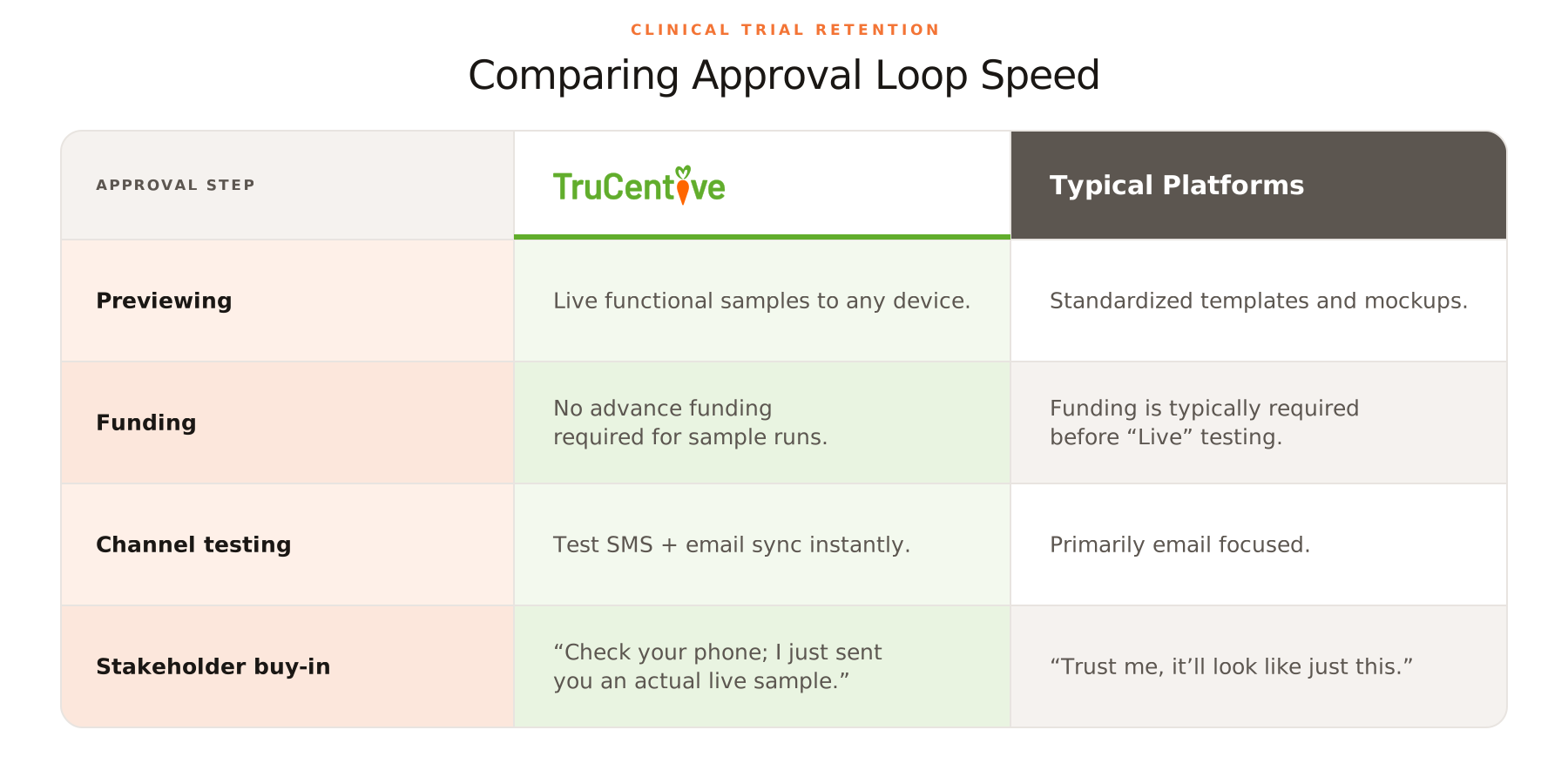
The majority of platforms do not offer the ability to directly test the user experience.
Typically, these platforms require users to complete several administrative steps such as providing credit card information, awaiting payment clearance, or establishing a corporate account before evaluating the recipient’s actual experience.
TruCentive streamlines this process by allowing you to bypass these requirements entirely.
Send a sample; enter your email and receive a live compensation message in seconds. This isn’t a static preview or a PDF mockup; it’s the actual functional UI your research subjects will see.
Since you can test the SMS and email delivery simultaneously, you can immediately check for things like:
Send-Ready projects come pre-configured, with branding, reminders, and logic already built.
Just drop in your logo and recipient list, and you can go from start to a finished project in minutes.
At TruCentive, we understand that no two research organizations operate the same way.
TruCentive is designed to support multiple approaches to compensation management, rather than dictate a specific approach.
Research leaders can assign responsibility for specific aspects of compensation while keeping organizational oversight. Study teams can manage participant payments efficiently and consistently.
Flexibility is key. As research programs grow and evolve, your compensation strategy must be able to evolve with them.
Design Sessions are a great way to review best practices and to create a complete delivery sample.
We’ll walk you through building a complete project in the campaign builder with your logo, your recipients, and your incentive selections.
We use cookies to improve your experience on our site. By using our site, you consent to cookies.
Manage your cookie preferences below:
Essential cookies enable basic functions and are necessary for the proper function of the website.
These cookies are needed for adding comments on this website.