
SOC 2 Type II attested · HIPAA · PCI DSS · WCAG 2.2 AA · Trust.TruCentive.com
Only pay for claimed deliveries
Support | 415-386-8600
Generic appreciation fails.
Meaningful incentives that are personal, timely, and frictionless, are how modern organizations translate gratitude into moments that actually matter to the people receiving them.
Research consistently demonstrates that feeling valued and appreciated is one of the most powerful drivers of employee engagement, loyalty, and performance. Gallup’s landmark studies show that employees who receive regular recognition are 31% less likely to leave their organization. Deloitte’s research shows companies with strong recognition programs are 12 times more likely to generate positive business outcomes.
Yet most organizations still rely on recognition that falls flat: mass emails from leadership, company-branded mugs, motivational posters, and once-a-year performance reviews. These gestures are well-intentioned. They are rarely meaningful.
The modern workforce has shifted. Hybrid and remote models have frayed the informal recognition networks that once existed organically — the hallway acknowledgment, the visible moment of public praise in a team meeting, the spontaneous celebration after a big win.
At the same time, employees’ expectations have risen. They want recognition that feels personal, not perfunctory — delivered close to the moment it was earned, not months later when a performance review finally rolls around. They want incentives with real, tangible value: choices they can make for themselves, experiences that fit their actual lives.
The incentive is not just a transaction. When done well, it is a signal: You matter. What you did matters. We noticed.

An incentive can accompany a specific message of appreciation when the recipient is eligible and comfortable receiving it. Offer relevant choices, communicate the reason for recognition, and use a documented delivery schedule.

Offer eligible recipients a practical selection such as an available gift card, merchandise, charitable choice, private acknowledgment, or no-gift option.

Tell recipients when recognition will be delivered and what to do if it is missing.

A specific message can explain the contribution being recognized.
Lower turnover
(Deloitte – Bersin by Deloitte)
Better engagement
(Gallup – “Recognition that hits the mark”)
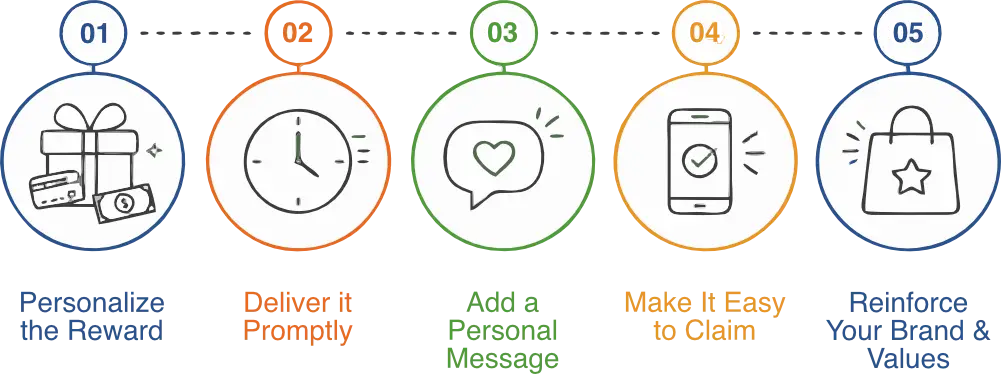
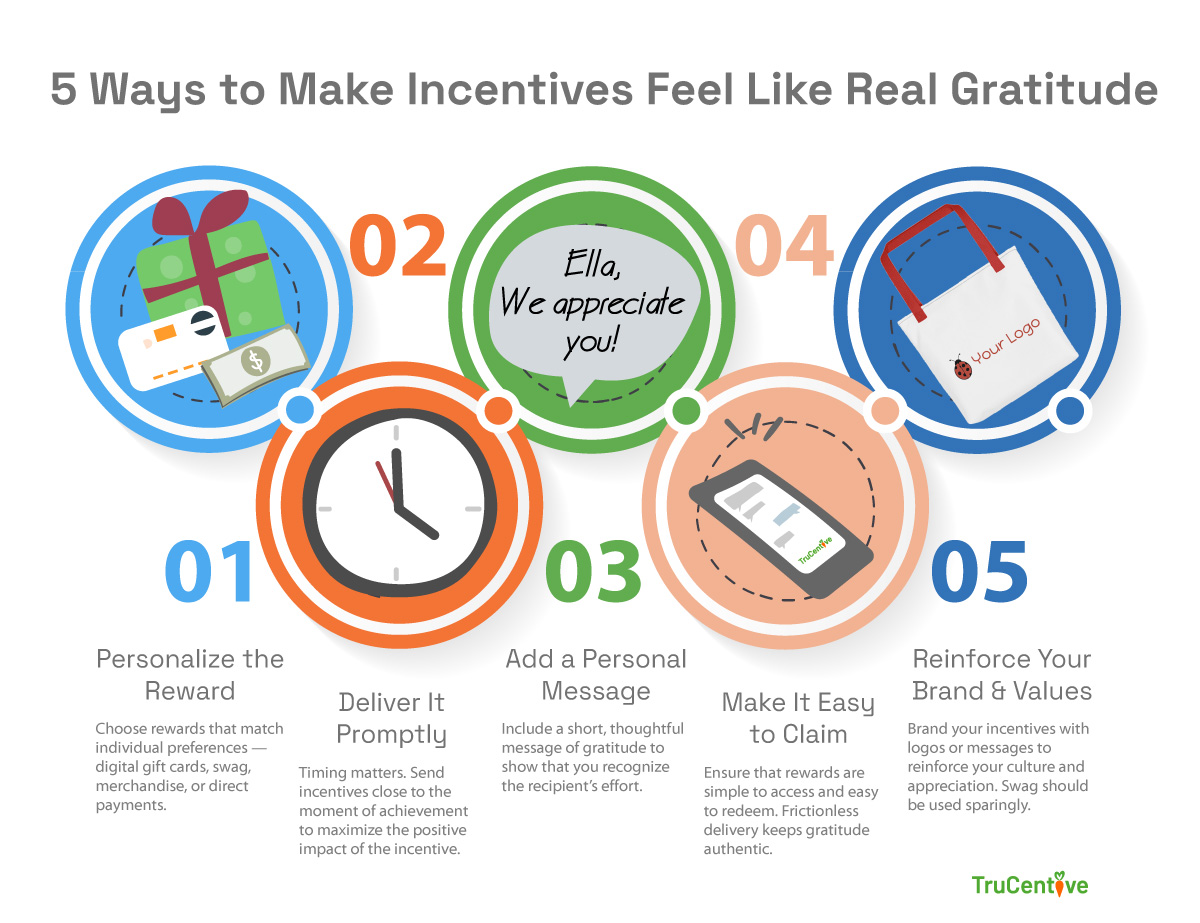
The most effective recognition programs share five qualities. Together, they transform an incentive from a transactional reward into a genuine act of gratitude.
Tailor to recipient preferences — gift cards they’ll actually use, merchandise they’ll keep, experiences that match their interests. Choice is the most powerful signal of respect.
Recognition loses power with every passing day. Deliver close to the moment of the action you want to reinforce. Automated triggers make timeliness effortless at scale.
Frictionless redemption. Mobile-accessible. No account creation required. No hoops to jump through. Every extra step between the recipient and the reward erodes the goodwill you’re trying to build.
Consistent messaging and visual design reinforce that the recognition is authentic. The delivery should feel like it came from your organization — not a generic vendor platform.
Track engagement, claim rates, and program ROI. Use data to refine what works and eliminate what doesn’t. Full visibility into outcomes is what separates strategic recognition from guesswork.
Many well-intentioned efforts fall flat because they rely on generic, delayed, or overly complicated gestures, tactics that can leave employees feeling overlooked rather than appreciated,
Rewards were promised by management as an incentive and thank you for folks asked to work through an unusually busy audit season. Delays pushed the awards back months.
The awards lost the connection between the effort and the recognition. Failing to fulfill the promise in a timely manner became a source of frustration and complaint.
A peer recognition program meant that employees could send each other points to redeem for small gift items and prizes, in an effort to bring appreciation to every level.
The award offers included just small, branded items and little of real value. Managers rarely took part. Employees stopped using it within months and it became a punchline (I’ll give you 20 points for attending my meeting.:)
A mid-sized manufacturing company launched a “Smile Fridays” campaign during a period when employees were facing chronic overtime, mandatory weekend shifts, and a backlog of unresolved safety complaints.
The initiative included upbeat posters in the breakroom, a weekly “fun fact” email from HR, and a mandatory 5-minute virtual meditation session for all staff.
An administrative services company sent every employee a $25 digital gift card “to show our appreciation for your commitment.” $25 is always good? Right?
The catch? Employees had to post a thank-you message about company culture on the internal social platform to claim it.
The organizations that consistently get recognition right share a common philosophy: gratitude is a design problem. It is not enough to intend appreciation — you have to design systems that deliver it in a way recipients actually experience as meaningful.
The concern with using technology to deliver recognition is that it will feel impersonal. That concern is valid. It is also addressable. The right platform makes gratitude more personal, not less, by removing the friction that causes organizations to under-recognize in the first place.
The platform handles the operational complexity — delivery, reminders, tracking, refunds — so your team can focus on what only humans can do: deciding who to recognize, writing the message that makes it personal, and building a culture where gratitude is the norm rather than the exception.
Design Sessions are a great way to review best practices and to create a complete delivery sample.
We’ll walk you through building a complete project in the campaign builder with your logo, your recipients, and your incentive selections.
We use cookies to improve your experience on our site. By using our site, you consent to cookies.
Manage your cookie preferences below:
Essential cookies enable basic functions and are necessary for the proper function of the website.
These cookies are needed for adding comments on this website.