
SOC 2 TYPE II Certified · HIPAA · PCI DSS · WCAG 2.2 AA · Trust.TruCentive.com

Unclaimed rewards returned to you 

Support | 415-386-8600

Gift Cards, Behavioral Design and Choice

Feature One Reward. Deliver Choice.

Should an incentive offer display six gift cards or feature one recognizable reward? Behavioral research supports a better strategy: use one clearly disclosed anchor reward in the offer, then provide a curated selection when the recipient redeems it.
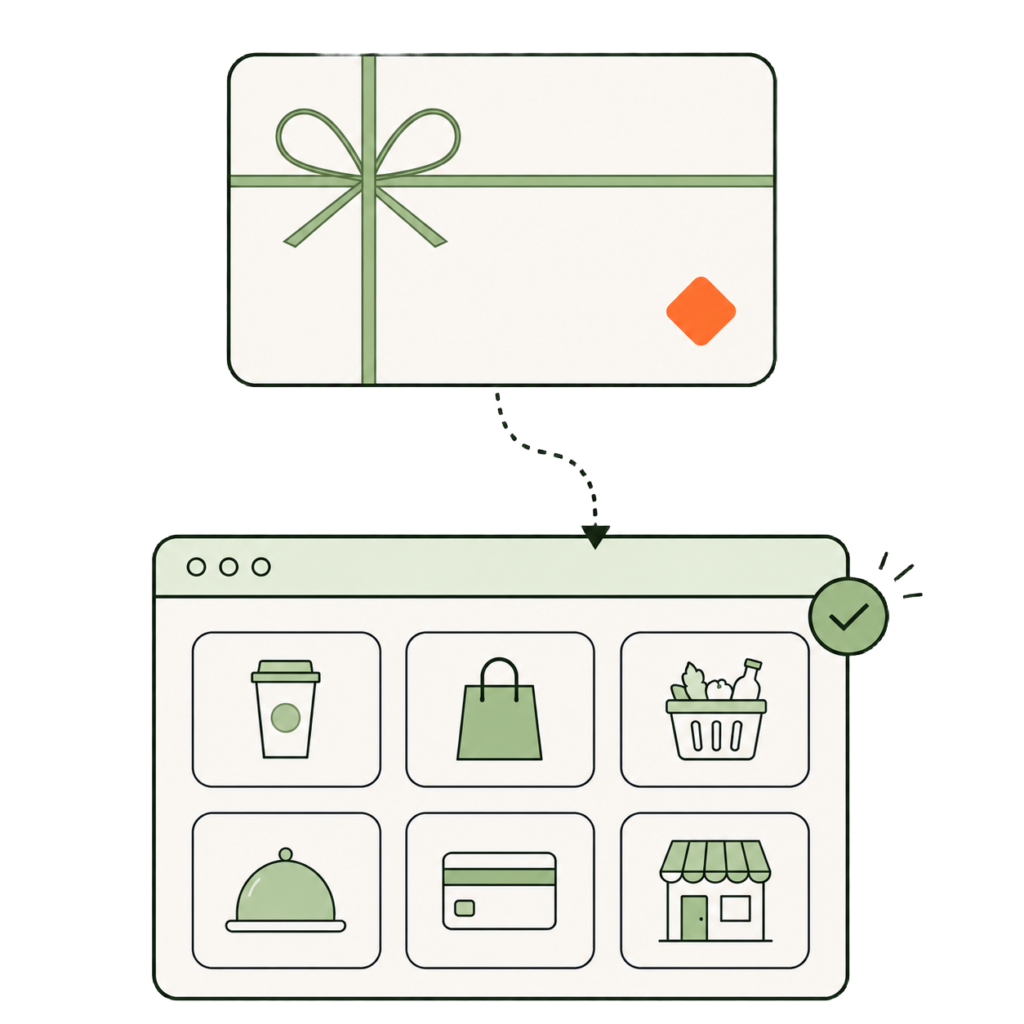
Make the offer clear without limiting the reward

Here’s the behavioral case for using one anchor gift card in your offer, and giving recipients more choice at redemption.
A featured gift card leading to a choice of six reward options
9 minute read

Imagine two survey invitations.

# 1 SAMPLE OFFER COPY

Complete this survey and receive a $25 Amazon gift card.

The first displays a single gift card logo.

# 2 SAMPLE OFFER COPY

Complete this survey and receive a $25 Amazon gift card—or choose another $25 reward.

The second displays six gift card logos and asks the recipient to consider Amazon, Visa, a grocery card, a fuel card, a restaurant card, and a major retailer before deciding whether to participate.

The first offer is easier to understand. The second provides more choice.

The first offer is easier to understand. The second provides more choice.

Which is better?

For many incentive campaigns, the strongest strategy combines the advantages of both:

Feature one recognizable gift card as the anchor reward, disclose that alternatives are available, and present a curated selection when the recipient claims the reward. Here, “anchor reward” simply means the reward featured in the marketing — not the psychological anchoring effect used in pricing.

Why one featured reward makes the offer easier to understand

“Receive a reward” is abstract. “Receive a $25 Amazon gift card” is concrete. The recipient can immediately picture the value and decide whether the requested action feels worthwhile.
Research on processing fluency shows that people’s judgments are influenced by how easy information feels to process.
“Difficulty forming a preference increases the likelihood that consumers will defer a choice altogether.”
That does not prove Amazon will outperform six gift card logos in every campaign. It supports the underlying design principle: do not make people solve a reward-selection problem before they have decided to participate.
A recognizable anchor reward gives the offer:
  • a specific value;
  • an immediate mental picture;
  • a shorter headline;
  • a cleaner visual hierarchy; and
  • less information to evaluate at the moment of decision.
The anchor makes the offer easier to market. It should not determine what every recipient must ultimately receive.

Why listing every option in the offer can work against you

People generally like having choices, but they do not necessarily want to evaluate every choice at every stage.
“Shoppers were more likely to purchase jam when offered a limited set of six varieties than an extensive set of twenty-four.”
The lesson is sometimes oversimplified as “fewer choices are always better.” Later research shows choice overload is more conditional — a meta-analysis of 99 observations and 7,202 participants identified complexity, decision difficulty, preference uncertainty, and the decision-maker’s goal as key moderators.
Choice is valuable, but its timing and presentation matter. At the invitation stage, the recipient is deciding whether to open an email, complete a survey, attend an event, or take some other action. Showing a wall of reward logos adds a second decision before the first one has been made.
Use the anchor reward to explain the value. Save the full selection experience for redemption, when choosing a reward is the recipient’s primary task.

Why offering only the anchor card is also a mistake

Simplifying the advertisement does not justify limiting the actual reward.
“An option is selected more often when alternatives are included than when that same option appears alone.”
An Amazon gift card may be popular, but popular does not mean universal. Some recipients would rather use their reward for groceries, fuel, transportation, or dining. Others may not shop with Amazon or may live in a country served by a different marketplace.
The Incentive Research Foundation has found substantial variation in how people prefer to be rewarded, and identifies choice of award options as an important element of an effective reward program. Offering alternatives does not weaken the anchor — it protects the incentive’s usable value for people whose preferences differ from the administrator’s assumptions.

Choice can make the reward feel less controlling

Choice is not merely a catalog feature. It can change how the reward is experienced.
“Monetary rewards presented in an autonomy-supportive way produced greater psychological need satisfaction and intrinsic motivation than rewards presented in a controlling way.”
The setting was not gift card redemption, so the results should not be treated as a direct test of this campaign structure. They do support the broader point that how a reward is presented matters, and preserving autonomy can improve its motivational meaning.
An anchor-only message says, in effect, “We have decided where you should spend this.” An anchor-plus-choice message says, “Here is a clear example of the reward value, and you can select what works for you.” That distinction is especially important for research participants, employees, patients, customers, and other audiences whose needs may vary widely.

The recommended three-stage strategy

The best default is progressive disclosure: show people the right amount of information for the decision they are making at that moment.

1. The offer: feature one anchor and disclose choice

Use one recognizable card in the headline or primary image. State the amount and make the availability of alternatives clear.
Sample Offer Copy
Complete the survey and receive a $25 Amazon gift card—or choose another $25 reward.
If a flexible prepaid card is particularly important to your audience, name it:
Sample Offer Copy
Earn a $25 Amazon gift card—or choose Visa or another popular reward.
Avoid advertising only an Amazon card and revealing the alternatives later. Choice should feel like part of the original promise, not a change in the terms.

2. The landing page: reinforce the anchor and preview variety

Keep the anchor prominent, then show two or three representative alternatives or categories:
Sample Offer Copy
Choose Amazon, Visa, popular retailers, restaurants, and more.
This confirms the reward is real and demonstrates breadth without presenting the entire catalog.

3. Redemption: provide a curated selection

When it is time to choose, present at least six meaningfully different options. A strong U.S. selection might include:
  1. The advertised anchor card;
  2. A flexible Visa, Mastercard, or payment option;
  3. A broad national retailer;
  4. A grocery option;
  5. A fuel or transportation option; and
  6. A dining or coffee option.
These should be six different uses—not six denominations or six similar retailers. For broader audiences, feature eight to twelve choices and provide a “View more options” path to the larger catalog.
“The strongest neural measure of choice-set value appeared at twelve options rather than six or twenty-four — though twelve is not a magic number.”

Why the flexible option matters

A retailer card can feel personal and memorable. A flexible prepaid or payment option solves a different problem: it lets the recipient decide where the value is most useful.
“Visa gift cards can be used anywhere Visa is accepted, subject to the issuer’s terms, geographic limitations, available balance, fees, and merchant-specific requirements.”
Visa
Including a flexible option is particularly valuable when preferences are unknown, the audience is diverse, or the incentive compensates someone for their time or participation. Many recipients will still select the anchor — the flexible choice exists for those who cannot, or do not want to, use it.

When an anchor reward may not be the best approach

An anchor is a useful marketing tool, not a requirement. Lead with “your choice of reward” instead when:
  • no single card is relevant across the audience;
  • the program is international and the featured card is not consistently available;
  • flexibility itself is the campaign’s main benefit;
  • compensation rules require a more neutral description; or
  • featuring one merchant could imply an endorsement or relationship that does not exist.
In those cases, keep the offer concrete by naming the amount and a few categories:
Sample Offer Copy
Complete the survey and choose a $25 reward from flexible prepaid cards, popular retailers, restaurants, and more.

Test the strategy with your own audience

The behavioral evidence supports anchor-plus-choice as a strong default, but no published study proves it is universally best for every gift card incentive. The most responsible approach is to test it.
Compare:
  • anchor only;
  • anchor plus a short choice disclosure; and
  • multiple cards displayed equally.
Measure participation or completion rate, reward claim rate, time to claim, the percentage selecting the anchor, alternative selections, expirations, and support questions. If nearly everyone chooses the anchor, the alternatives still protected the recipients who needed another option. If many select something else, the data shows why offering only one card would have reduced the reward’s relevance.

Make the message simple—not the reward restrictive

The choice between one card and six cards is a false choice. You do not need to put six logos in the advertisement to provide six useful options. If a recognizable gift card makes the offer more concrete, feature it, disclose that alternatives are available, then let recipients choose from a curated selection when they redeem.

Feature one reward. Deliver more choice.

TruCentive makes it possible to use a familiar anchor reward in the campaign while giving each recipient access to approved gift cards, prepaid cards, payments, merchandise, and SWAG. The organization retains control over the value and available options; the recipient chooses the reward that works best for them.

Key points

1

Feature One Anchor Reward

State the amount and name one recognizable gift card so the offer is concrete and easy to evaluate at a glance.
2

Disclose Choice Upfront

Say “or choose another reward” in the same headline. Choice should feel like the original promise, not a change in terms.
3

Preview Variety on the Landing Page

Show two or three representative categories to confirm the reward is real without presenting the entire catalog.
4

Offer Six Meaningfully Different Options

At redemption, include the anchor, a flexible payment option, a retailer, a grocery option, a fuel option, and a dining option.
5

Include a Flexible Payment Option

A Visa, Mastercard, or similar option lets recipients decide where the value is most useful when preferences are unknown.
6

Test Anchor vs. Anchor-Plus-Choice

Measure claim rate, time to claim, and support questions before rolling a strategy out broadly.

Summary

The choice between one gift card and six is a false choice. Feature one recognizable anchor reward to keep the offer concrete, disclose that alternatives exist, and provide a curated selection of at least six meaningfully different options when the recipient redeems.
This progressive-disclosure approach fits what behavioral research shows about processing fluency, choice overload, single-option aversion, and autonomy — and it keeps the reward relevant for recipients whose preferences differ from the administrator’s assumptions.
Ready to create a clearer incentive offer without limiting recipient choice?
See your gift card offer built live in 30 minutes
Design Sessions are a great way to review best practices and create a complete delivery sample.

Research and sources

Amazon, Visa, and Mastercard are trademarks of their respective owners. Their inclusion should not imply endorsement or affiliation.